 Español
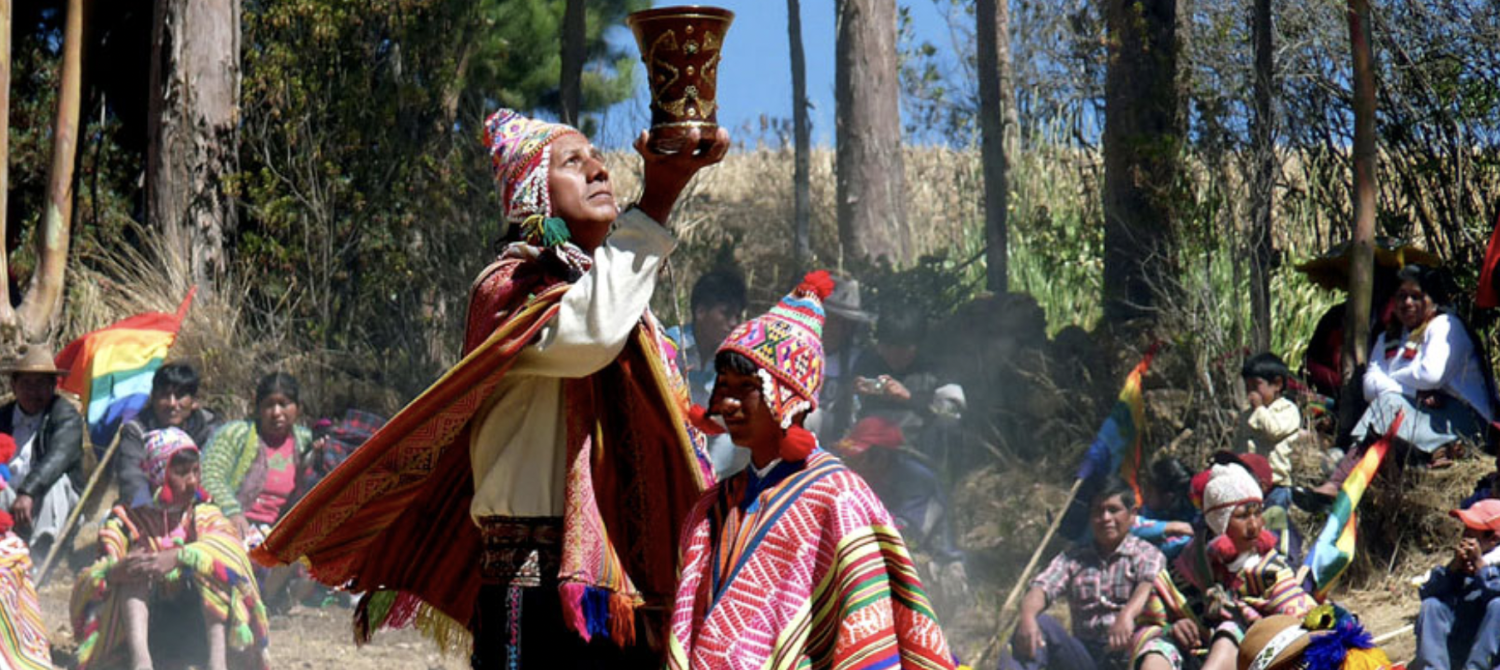

Pachamama holds a fundamental place in Andean cosmovision. Considered Mother Earth, she represents fertility, abundance, and the spiritual connection between human beings and nature. Every year, especially in August, thousands of communities across the Andes keep this ancestral tradition alive through ceremonies of gratitude and offerings that reflect deep respect for the land and its resources.
What does Pachamama mean?
The word Pachamama comes from the Quechua language and is formed by two terms: “pacha,” which can be understood as world, universe, time, or earth, and “mama,” meaning mother. Together, they form the concept of “Mother Earth” or “Mother World.”
In the Andean worldview, nature is alive. Mountains, rivers, lakes, plants, animals, and celestial bodies are all part of a living system with which humans maintain a relationship of respect, balance, and reciprocity.
What is Pachamama Day?
Pachamama Day is celebrated every August 1st and is one of the most important dates in the Andean calendar. This tradition is closely linked to the agricultural cycle, as it marks the beginning of a new stage of preparation for upcoming harvests.
During this celebration, communities express gratitude for the food, water, and resources received throughout the year, while also asking for abundance and prosperity for the new agricultural cycle.
Who participates in this celebration?
People of all ages take part in this ceremony: farmers, families, local authorities, and community organizations. Visitors interested in Andean culture also commonly join these celebrations.
Rather than a religious ritual alone, it is a cultural expression that strengthens identity and the bond between communities and their natural environment.
How is Pachamama Day celebrated?
The celebration consists of preparing an offering for Mother Earth. A small hole is dug in the ground, symbolically considered the “mouth of Pachamama,” where various offerings are placed.
Common offerings include:
- Coca leaves
- Chicha or traditional beverages
- Food and agricultural products
- Sweets and candies
- Coins
- Flowers
- Traditional Andean blankets (llicllas)
These offerings are carefully placed into the earth as a gesture of gratitude. In many communities, the ceremony is accompanied by music, dances, and family gatherings that strengthen communal bonds.
Pachamama within the Andean cosmovision
The Andean worldview understands the universe as being divided into three main realms:
Hanan Pacha: the upper world
This is the celestial realm where the main deities associated with creation and the cosmos reside. It represents cosmic order.
Kay Pacha: the earthly world
This is the world where humans, animals, and nature deities live. Pachamama is present here as the protector of life and provider of fertility.
Uku Pacha: the inner world
This is the underworld, connected to ancestors, the renewal of life, and the forces beneath the earth.
Main gods in Andean tradition
Andean cultures developed a spiritual worldview in which natural elements were considered sacred.
Deities of Hanan Pacha
- Wiracocha, creator of the universe
- Inti, the Sun God
- Mama Quilla, the Moon Goddess
- Illapa, god of lightning and rain
Deities of Kay Pacha
- Pachamama, Mother Earth
- Mama Sara, goddess of corn
- Mama Wayra, goddess of the wind
- Mama Nina, goddess of fire
- Pariacaca, associated with rain and fertility
Deities of Uku Pacha
- Pachacamac, linked to earth movements
- Mama Cocha, protector of waters
- Supay, lord of the underworld
The importance of Pachamama today
The reverence for Pachamama remains alive in Andean communities and also in urban settings. These practices preserve an ancient tradition based on respect for nature and environmental balance.
More than a celebration, Pachamama represents a philosophy of life centered on harmony between human beings and the natural world.